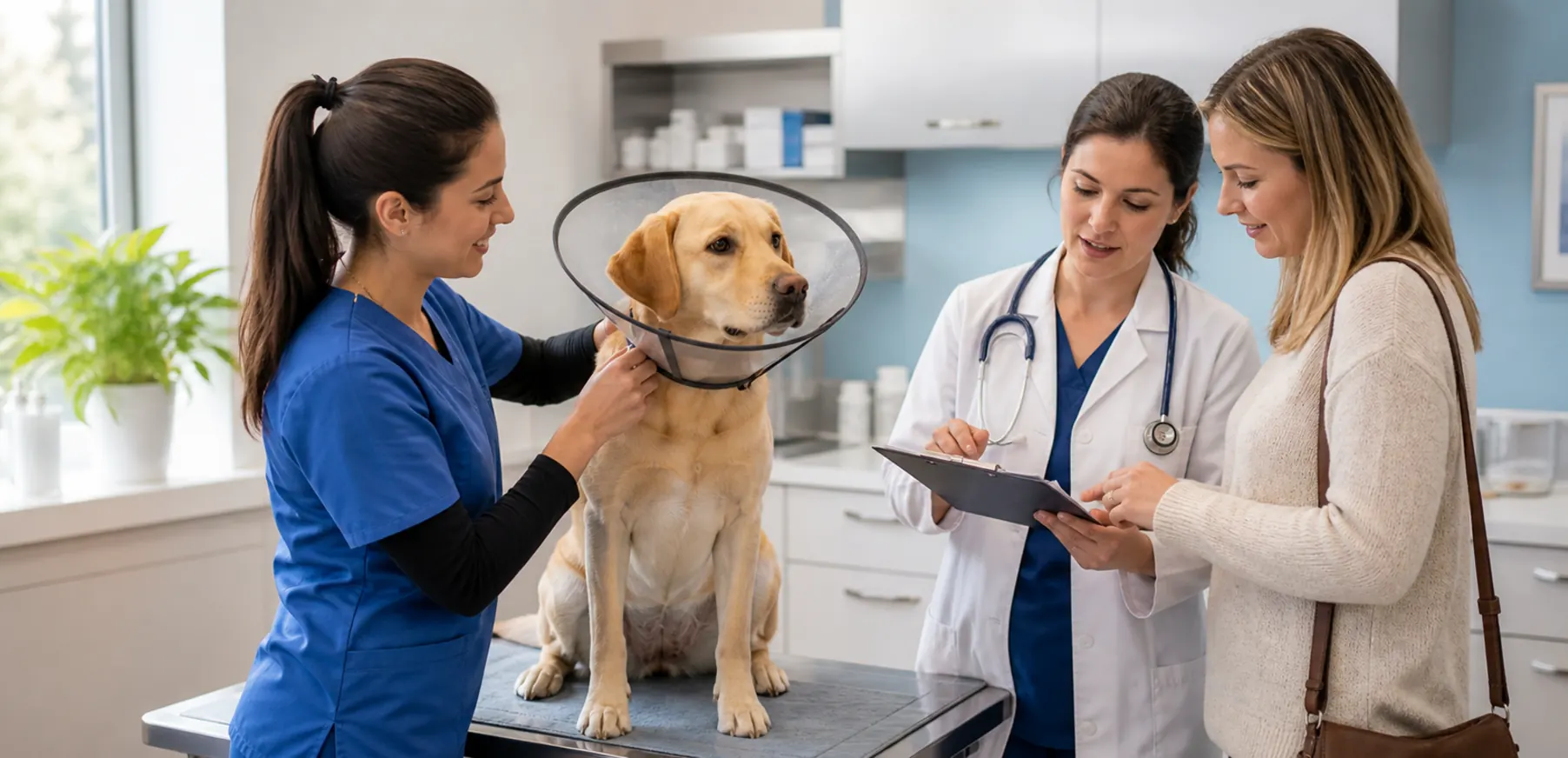
Spaying and neutering prevent unplanned litters and lower the risk of several diseases. A spay before the first heat almost removes the risk of mammary cancer and prevents pyometra, a dangerous infection of the uterus. Neutering prevents testicular cancer and cuts down on roaming and marking.
When to do it depends on the dog. Large breeds may have healthier joints if surgery waits until their skeleton has finished growing. We'll recommend timing based on evidence for your dog's breed and size. Each surgery comes with blood work before anesthesia, a team member dedicated to monitoring, and pain control from several angles.
What's part of every surgery
- Advice on timing for your dog's breed
- Exam and blood work before anesthesia
- Monitoring throughout anesthesia
- Pain medicine given before, during, and after surgery
- Home care instructions and follow-up help
What to expect
Your dog comes in for the day. At morning drop-off we do an exam and go over the blood work. During surgery a team member is dedicated to monitoring anesthesia, and pain relief starts before the incision is made. Most dogs go home that evening with written aftercare. Expect 10-14 days of limited activity while you protect the incision.
More about these procedures
Dog Spay & Neuter guides & handouts
Handouts from our library that go with this service, to read at home.
Spay and Neuter Surgery for Dogs: When to Do It, What Happens, and Healing at Home
A spay takes out a female dog's ovaries and uterus, and a neuter takes out a male dog's testicles. They're the most common operations vets perform, and they have a big effect on long-term health. Timed well for each dog, they completely prevent several serious diseases.
More Than Preventing Puppies
- A spay before the first heat cycle almost removes the risk of breast (mammary) cancer
- Spayed females can't get pyometra, a life-threatening infection of the uterus that strikes about one in four unspayed females by age ten
- Neutered males can't get testicular cancer and are protected from most prostate enlargement
- Behaviors driven by hormones, like roaming, marking, and some aggression, usually ease off
Why Breed and Size Affect Timing
The old rule of spaying or neutering every dog at "six months" has been replaced by better research. Small breeds grow up fast and usually do fine with surgery at about six months. Many large and giant breeds are different: holding off until the skeleton is mature, often at 12 to 18 months, seems to help the joints develop and may reduce the chance of some orthopedic injuries.
No single answer fits every dog. That's why we base our advice on your dog's breed and size instead of a set date on the calendar.
Surgery Day, Step by Step
- Drop-off in the morning after no food overnight
- An exam and a review of blood work before anesthesia
- Pain medicine given before surgery starts
- A team member assigned to watch anesthesia the whole time
- The surgery itself, which usually takes less than an hour
- Recovery in a warm, watched area, and most dogs go home that evening
Caring for Your Dog at Home
Expect 10 to 14 days of rest: walks on a leash only, no baths or swimming, and a cone or recovery suit to keep your dog from licking the incision. Most dogs feel fine after a day or two, and keeping a dog calm when they feel good is usually the hardest part.
Look at the incision every day. A little bruising in the first days is normal. Call us if you see discharge, redness that's spreading, swelling, or the incision opening.
Straight Answers to Common Worries
- Your dog's personality stays the same. Hormone-driven habits fade, but the dog you know doesn't change
- Metabolism slows a little afterward, so we'll adjust how much you feed to keep weight in a healthy range
- With screening and monitoring, today's anesthesia makes a routine spay or neuter very low risk
- Adult and senior dogs can still be spayed or neutered safely, and they still get the benefits
Frequently asked questions
What's the best age to spay or neuter?
That depends on breed and size. Small breeds usually do well at about six months. For many large and giant breeds, waiting until the skeleton is mature (12-18 months) is better for the joints. We'll recommend timing for your dog based on the evidence.
Will my dog act differently after being spayed or neutered?
Their basic personality stays the same. What usually fades is behavior driven by hormones, like roaming, marking, and some aggression toward other dogs in males. Keep an eye on weight afterward, because metabolism slows a little. We'll adjust food portions at the recovery recheck.
What does recovery really look like?
For ten to fourteen days, keep your dog on a leash for all activity, skip swimming and baths, and don't let them lick the incision at all (use a cone or recovery suit). Most dogs feel normal again within a few days, which is why sticking to the rules, not the healing, is the hard part.
Ready to schedule?
Request an appointment at our Orange clinic or call our team — we serve pets and their people across the surrounding communities.